

Closing the Loop
Best Hospital Compliance Platforms for Survey Readiness
When a surveyor asks for documentation, the real test is not whether your hospital completed the work. It is whether your team can prove what happened, when it happened, who completed it, what was found, and how any deficiency was corrected.
That is where disconnected spreadsheets, paper binders, email threads, and stand-alone maintenance systems begin to show their limits.
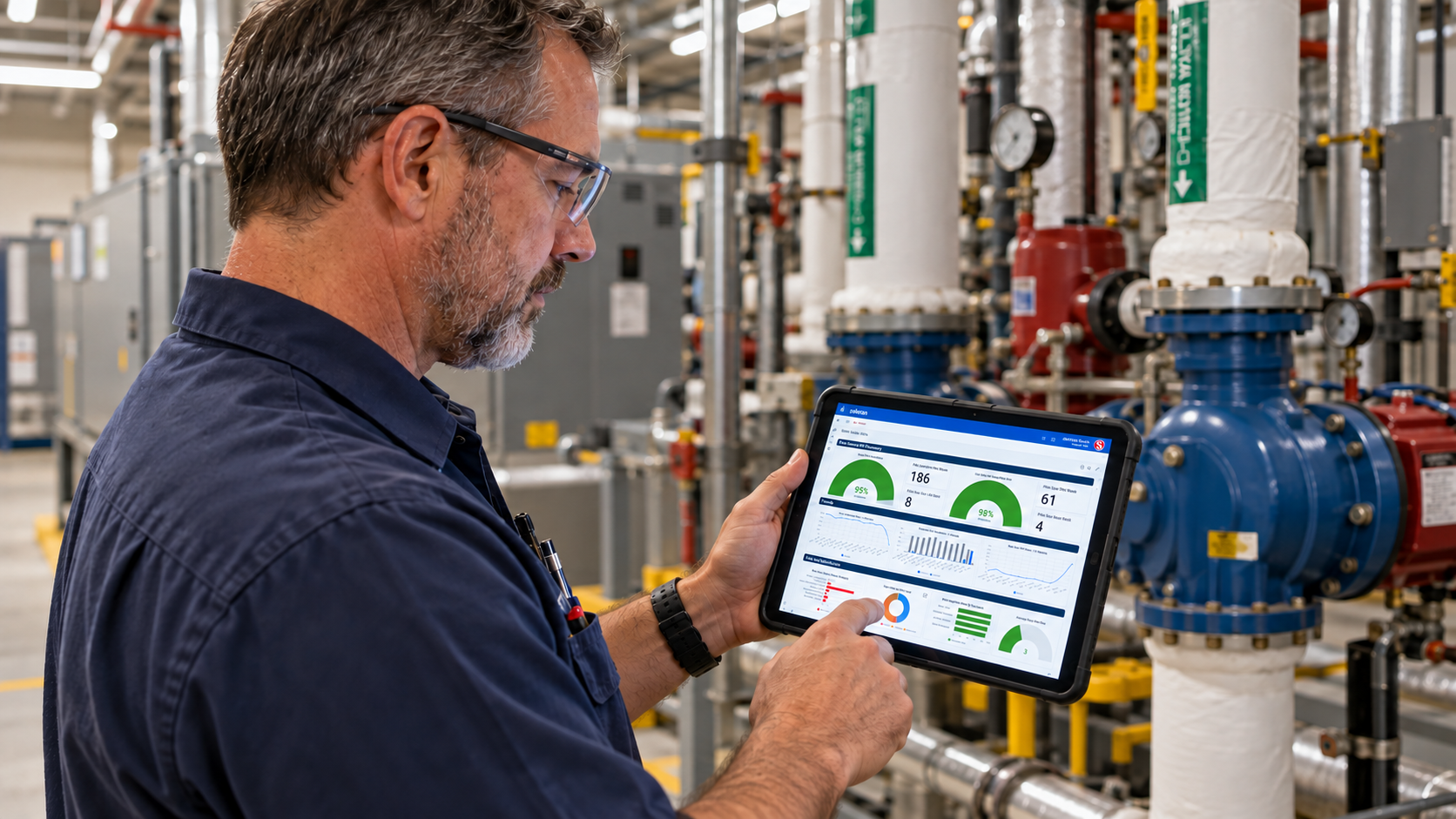
The best cloud-based compliance management platforms do more than store records. They connect inspections, preventive maintenance, permits, corrective actions, supporting evidence, and reporting so hospital facilities teams can maintain readiness as part of their normal work—not as a separate project before a survey.
This comparison looks at five platforms used in or applicable to healthcare facility operations: Soleran Oro, Accruent TMS, FSI, Brightly TheWorxHub, and Nuvolo. Each has a different center of gravity, so the right choice depends on whether your organization needs deeper compliance workflows, a strong healthcare CMMS, broader enterprise asset management, or an integrated workplace platform.
What Survey Readiness Should Look Like in a Modern Platform
Joint Commission describes accreditation as an evaluation process intended to help healthcare organizations assess and improve safety and quality. Its Environment of Care resources focus on reducing noncompliance in areas that directly involve the physical environment. With Accreditation 360 taking effect in 2026, the organization has also emphasized a more streamlined, data-informed, outcomes-focused approach.
Software cannot make a hospital compliant or guarantee a successful survey. It can, however, make the underlying work more consistent, visible, traceable, and easier to demonstrate.
For this comparison, we considered six practical criteria:
- Evidence Retrieval: Can users quickly produce inspection records, work histories, photos, attachments, timestamps, and other supporting documentation?
- Corrective-Action Follow-Through: Can a failed inspection item automatically create, assign, escalate, and track corrective work through closure?
- Facility Workflow Fit: Does the platform support healthcare-specific processes such as Environment of Care rounds, life safety activities, permits, fire drills, preventive maintenance, and work orders?
- Configurability: Can the hospital adjust forms, workflows, dashboards, reports, roles, and notifications without a lengthy development cycle?
- Multi-Site Visibility: Can leaders see status, overdue work, recurring findings, and risk across departments, campuses, and the health system?
- Integration Depth: Can compliance activity connect with maintenance, assets, projects, vendors, purchasing, IT systems, and other operational data?
Hospital Compliance Platform Comparison at a Glance
1. Soleran Oro: Best for Configurable, Connected Compliance Workflows
Soleran Oro is built for healthcare organizations that need compliance processes to reflect how their teams actually work. Rather than forcing every facility into the same rigid path, the platform allows teams to configure forms, workflows, dashboards, reports, roles, and permissions without code.
That flexibility matters in hospital compliance management because the same issue can cross several departments. A finding during an Environment of Care round may need to create corrective work, notify a leader, collect a photo, route to a vendor, and remain visible until it is verified and closed. When those steps live in separate systems, the handoffs become the risk. Ease of mobile or offline capability is another Soleran Oro plus. In Soleran Oro, applications and workflows operate on one connected platform, helping teams move from finding to resolution without losing the history in between.
The Soleran Oro Marketplace adds another distinction. Organizations can begin with the applications they need and expand on the same platform over time, including proven applications and organization-specific workflows. This is useful for multi-site systems that want to standardize core processes while allowing appropriate variation by department or facility. The Integration Manager also allows apps you use already to be integrated directly into the platform. Implementation and staff training time is greatly reduced on a platform with these capabilities.
Survey-Readiness Strengths:
- No-code configuration for forms, workflows, dashboards, reports, and roles
- Automated routing, notifications, escalation, and follow-through
- Regulatory standards built in
- Connected applications for facility and compliance operations
- Role-based visibility from frontline users to system leaders
- Mobile and web access for documenting work where it happens
- Expandability through the Soleran Oro Marketplace and external connections through Integration Manager
Best Fit: Hospitals that view compliance as an interconnected operational process—not simply a maintenance reporting requirement—and want the flexibility to shape the platform around their teams.
What to Validate: Ask for a demonstration using one of your own workflows from discovery through verified closure. Confirm which Soleran Oro applications are available for the processes in scope, how historical records will be migrated, and which external systems will connect at launch.
2. Accruent TMS: Maintenance and Asset-Centered Compliance
Accruent TMS is a CMMS with a strong foundation in facility and biomedical asset management. Its published capabilities include work-order management, preventive maintenance, asset lifecycle tracking, configurable forms and reports, dashboards, mobile access, and third-party integrations.
For Survey Readiness: TMS is particularly relevant where preventive maintenance and equipment documentation are central. Accruent describes prebuilt tools for Environment of Care and PM compliance, including procedures, forms, process logic, automation, reports, and dashboards. The platform also supports regulatory reports such as Environment of Care summaries, life safety checklists, asset detail, PM completion, and open regulatory work orders.
Best Fit: Facilities and HTM teams that want a mature healthcare CMMS and place heavy emphasis on assets, maintenance schedules, equipment histories, and PM reporting.
What to Validate: Map compliance processes that begin outside the CMMS—such as permits, multidisciplinary rounds, construction risk, or policy-based audits—to see whether they fit natively, require configuration, or depend on another product.
3. FSI: CMMS Plus Facility-Data Services
FSI offers a cloud-based CMMS/EAM built for maintenance management. Its platform combines work orders, assets, rounding, reporting, mobile tools, drawings, space management, capital planning, and digital compliance records.
FSI's compliance capabilities include customizable rounding, audit trails, hospital-wide collaboration, automated regulatory analysis, and work-order creation. Its eBinders product centralizes compliance reports and dashboards, while its drawing, space, virtual facility, and asset-data services can be valuable for hospitals that need to improve the quality of the underlying information—not just replace the software interface.
Field usability is another area to examine. FSI promotes mobile and offline work capabilities, image attachments, floor-plan-based work creation, and tools designed for technicians. Better field adoption generally leads to better data, which ultimately strengthens regulatory compliance management and survey evidence.
Best Fit: Hospitals seeking a healthcare-first CMMS/EAM and potentially needing supporting services for asset inventories, barcoding, CAD files, drawings, or facility visualization.
What to Validate: Determine which capabilities are included in the proposed configuration and which require separate modules or services. Test how easily users can move from a finding to corrective action and then retrieve the complete record during a mock survey.
4. Brightly TheWorxHub: Accessible Maintenance and Compliance Tracking
TheWorxHub is a cloud-based healthcare maintenance platform that brings together work orders, assets, compliance, preventive maintenance, inventory, and security rounds. It emphasizes usability, automated tasks, risk assessments, compliance code tracking, and mobile access.
Brightly's Compliance Pro extends the platform with digital compliance binders, permitting, dashboards, alerts for missing documentation, and links between compliance records and maintenance work. This directly addresses a common survey-readiness weakness: documentation exists, but it is stored apart from the work that created it.
The platform may appeal to organizations that want a straightforward experience for maintenance and compliance users. A published Hartford HealthCare case study highlights configurable templates, required task completion, corrective-action work orders, and alerts as central to its compliance process.
Best Fit: Hospitals wanting a healthcare-focused, user-friendly CMMS that combines everyday maintenance with structured compliance tracking and document retrieval.
What to Validate: Use demonstrations to test complex exception paths, cross-department routing, enterprise reporting, and the degree of workflow customization available without vendor intervention.
5. Nuvolo Connected Workplace: Broad Enterprise Consolidation
Nuvolo takes a wider integrated workplace management approach. Its healthcare offering connects clinical equipment, facilities, real estate, capital planning, asset maintenance, sustainability, and operational technology security on a broader platform.
That scope can be valuable to large health systems trying to reduce enterprise silos. Survey readiness improves when leaders can connect asset condition, maintenance history, capital decisions, location data, and operational risk instead of reviewing each in isolation. Nuvolo also positions its platform around a unified view of the asset lifecycle and real-time portfolio insight.
Its center of gravity, however, is broader than accreditation readiness alone. A health system should carefully examine how specific Environment of Care, life safety, rounding, permitting, and corrective-action workflows will be configured and supported.
Best Fit: Large or complex organizations seeking an enterprise platform across facilities, HTM, real estate, capital planning, and related workplace functions.
What to Validate: Ask the vendor to demonstrate hospital-specific survey workflows rather than a general asset-management scenario. Clarify implementation complexity, administrative ownership, integration architecture, and the resources needed to maintain the solution.
Questions to Ask Every Vendor
A polished demonstration can make almost any cloud compliance software look easy. The best way to see the difference is to provide vendors with the same realistic scenario and ask them to complete it live.
For example: A technician finds a damaged fire barrier during a round. Ask each vendor to show how the system documents the finding, captures evidence, assigns corrective work, escalates an overdue task, verifies completion, preserves the audit trail, and produces the full record for a surveyor.
Then Ask:
- Can we change this workflow ourselves without custom code?
- Can a failed item create corrective work automatically?
- Can the system prevent closure when required evidence is missing?
- Can we see overdue and recurring findings across every hospital?
- Can leaders drill from a system dashboard to the original record?
- Are timestamps, user actions, attachments, approvals, and changes retained?
- How does the platform handle mobile work and unreliable connectivity?
- Which integrations are standard, configurable, or custom?
- How are standards changes reflected in templates and workflows?
- What will implementation, migration, training, and ongoing administration require from our team?
The Best Platform is the One Your Team Can Sustain Every Day
Survey readiness is not a binder, a dashboard, or a report generated the week before a visit. It is the result of reliable work performed and documented over time.
Accruent TMS, FSI, Brightly TheWorxHub, and Nuvolo each offer credible strengths. TMS stands out for healthcare maintenance and asset management. FSI combines a healthcare CMMS with deep facility-data capabilities. TheWorxHub brings maintenance and compliance tracking together in an approachable system. Nuvolo offers broad enterprise consolidation.
Soleran Oro is especially well suited to hospitals that need compliance workflows to connect across people, departments, facilities, and applications while remaining configurable as operations change. Its advantage is not simply digitizing an existing checklist. It is helping the organization build a visible, automated path from work identified to work completed—and from work completed to evidence ready. Plus its ability to expand with a marketplace of facility management apps right on the same platform reduces training and implementation time by leaps and bounds.
The final decision should come down to workflow fit, adoption, integration, and proof. Choose the platform that makes the right process easier to follow on an ordinary Tuesday. That is the platform most likely to have your team ready when a surveyor arrives.
Editorial Source Links
- Joint Commission: Environment of Care Resource Center
- Joint Commission: Accreditation 360 announcement
- Soleran Oro
- Accruent TMS
- FSI healthcare CMMS/EAM
- Brightly TheWorxHub
- Nuvolo Connected Workplace
Editor’s note: Platform capabilities and packaging change over time. Confirm current modules, integrations, security requirements, implementation scope, and pricing directly with each vendor. Software supports compliance processes but does not guarantee accreditation or survey outcomes.
Share the blog


Our latest blogs and news