

Closing the Loop
From Work Orders to Readiness: Automating Physical Environment Compliance for Healthcare Facilities
Healthcare facilities teams carry a heavy and growing load: aging infrastructure, lean staffing, competing capital priorities, and the standing expectation that the physical environment remains safe, compliant, and survey-ready every day of the year. The knowledge to meet that expectation is rarely the problem. Your safety, compliance, and engineering leaders know the standards. The problem is operational—the work of detecting an issue, turning it into action, completing it, and proving it lives across disconnected tools that were never designed to talk to one another.
Tours and tracers are captured on paper or in a standalone app. Work orders sit in a CMMS. Permits move through email and PDFs. Fire drills and life-safety checks live in someone’s calendar and a spreadsheet. Each tool does its job, but the seams between them are where readiness leaks out—findings that never become work, work that closes without a clear record, and a survey season that turns into a manual scramble to reassemble a story that should already exist.
The path to consistent readiness is not another point solution, but an integrated, automated workflow that connects rounding, work orders, permits, life safety, and asset management into one operating system. When those activities share a single platform, compliance stops being a periodic project and becomes a continuous, visible state of operations—less manual effort for the front line, faster closure of real risk, and real-time confidence for leadership.
Designing an Integrated Approach to Physical Environment Compliance
An integrated approach to physical environment compliance connects five key areas of facilities operations that many organizations manage separately today.. The point is not to replace the expertise behind each one, but to put them on shared rails so information moves automatically from where it’s found to where it’s fixed to where it’s recorded.
- Tours and Rounds — The front door, where issues are detected.
- Work Orders — The engine, where remediation happens.
- Permits & Project Risk Assessments — The controlled gateway for higher-risk work.
- Fire Drill Management — Coordinating recurring drill schedules and documentation.
- Asset and Inventory Management — The foundation for tracking equipment, maintenance, and associated work.
Tours as the Front Door
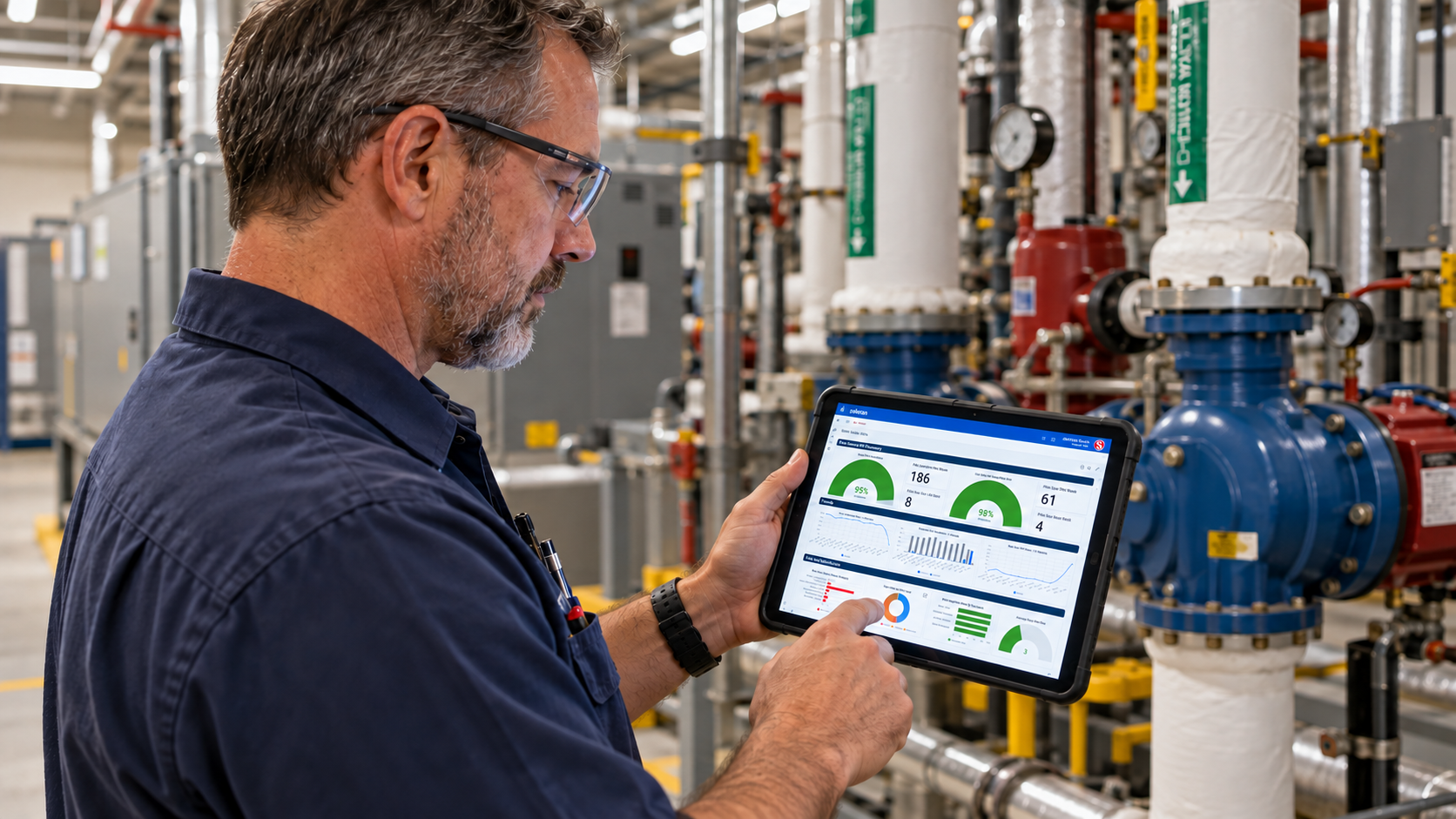
Rounding is the frontline mechanism for catching issues before a surveyor does. In an integrated model, tour forms are digital and standardized, with consistent fields for location, category, and severity. A finding can generate a work order directly—or attach to an existing one—instead of being transcribed by hand later. Every deficiency becomes actionable and traceable the moment it’s recorded, with no extra administrative step.
Work Orders as the Engine
Work orders are where the fix actually happens, so the workflow should make them easy to complete and easy to trust. Work order types can mirror the risk categories your program already uses, required fields can capture corrective action and completion evidence rather than just a “done” flag, and every order can link back to the finding, or event that triggered it. When you can show that each issue moved through a structured lifecycle to closure, a survey becomes a demonstration of process rather than a hunt for documentation.
Tours that Drive Actionable Work
Soleran From Work Orders to Readiness
Problem: Tours found issues, but findings sat in reports that didn’t reliably become work orders. The same problems recurred, and leaders had little visibility into closure rates.
Approach: Standardized tour forms with consistent categories and severities; one-click work order creation pre-filled with location and detail; a deficiency lifecycle view by building, service line, and category; and target turnaround times with escalation for high-severity items.
Outcome: Tour findings became a prioritized work queue instead of a static report. Closure rates improved visibly, and staff saw that the issues they raised were tracked and resolved—which is exactly what reinforces a safety culture.
Permits as a Controlled Gateway
Above-ceiling work, hot work, and construction activity are common sources of risk, and they benefit most from structure. A digital permit workflow provides role-based request forms for contractors and staff, routes approvals to the right reviewers with clear turnaround expectations, carries the required conditions on the permit record itself, generates work orders when field work or inspection is needed, and captures closeout evidence against both the permit and any related orders. The result is simple visibility into where high-risk work is happening and whether the agreed safeguards were actually followed.
PCRA, ICRA, and ILSM Assessments
Construction and renovation work in a healthcare setting rarely travels alone. It’s typically led by a related set of assessments—a Pre-Construction Risk Assessment (PCRA), an Infection Control Risk Assessment (ICRA), and, when life safety systems are affected, a review of Interim Life Safety Measures (ILSM). In most facilities today, these assessments are completed on separate forms, by separate teams, on different timelines, making it difficult to maintain a complete picture of project readiness and ensure all required assessments and follow-up activities are addressed.
The fix is structural, not procedural: Bring PCRA, ICRA, and ILSM together within a centralized project workflow. A construction project can trigger the relevant assessments based on scope and location, route each one to the appropriate reviewer (infection prevention, life safety, engineering), and track their progress as part of the overall project. Projects can remain open until all required assessments and associated activities are complete. Any interim measure the assessment calls for—temporary barriers, signage, monitoring rounds, alternate egress—can generate its own tracked task rather than living in a margin note. Every assessment, approval, and follow-up action stays connected to the same project record.
This is intentionally a workflow description, not a compliance one. Your infection prevention, life safety, and project teams define what each assessment requires and when it’s triggered. The platform’s job is narrower and more mechanical—make sure the right assessments happen, reach the appropriate reviewers, generate the work they imply, and leave a complete, time-stamped record associated with the project.
Fire Drills Management
Fire drills are a recurring requirement in healthcare facilities, with scheduling considerations that vary by building, occupancy, and shift. Managing these requirements across separate calendars and spreadsheets can make it difficult to ensure drills are scheduled appropriately, completed on time, and documented consistently.
Centralizing fire drill scheduling in a single system—with recurring schedules configured by building, area, and shift, automated reminders to responsible staff, and streamlined documentation of completed drills—helps facilities maintain consistency and visibility across their fire drill programs. It also provides a reliable record of scheduled and completed activities to support NFPA requirements and survey readiness.
Managing Fire Drill Schedules
Problem: Fire drill schedules were managed through calendar invites and local spreadsheets, making it difficult to coordinate drills across buildings and shifts, track completion, and identify missed or overdue activities.
Approach: Centralize fire drill scheduling with recurring schedules tailored to each building, area, and shift. Automatically generate scheduled drills, assign responsible personnel, and capture completion details in a consistent, accessible record.
Outcome: A complete, time-stamped history of scheduled and completed fire drills, improved visibility into outstanding requirements, and greater confidence that fire drill programs are being managed consistently in support of NFPA requirements and survey readiness.
Assets and Inventory as the Backbone
Asset and inventory management provide the foundation for effective facilities maintenance and help support physical environment compliance. Maintaining accurate asset records—including equipment location, classification, and maintenance requirements—allows facilities teams to schedule and track preventive maintenance (PM), document completed work, and maintain a reliable service history. When preventive maintenance activities and corrective work orders are connected to the appropriate assets, organizations gain greater visibility into equipment condition, maintenance history, and outstanding needs. This not only supports day-to-day operations but also helps demonstrate that critical equipment and systems are being maintained consistently and appropriately.
Automation That Actually Helps the Front Line
Effective workflow automation does three things: It eliminates duplicate data entry, routes the right work to the right person, and makes documentation a natural by-product of completing the work.
Eliminating Swivel Chair Work
The single biggest source of wasted effort is re-keying the same information across systems. The fixes are practical: one-click conversion from a finding to a work order, automatic population of location, building, asset, and category data, and integrations with the CMMS and building automation systems so alerts and alarms can open or update work orders without anyone retyping anything. Beyond the time saved, this removes the transcription errors and dropped issues that fragmented workflows quietly produce.
Smart Routing and Escalation
Automation should also make sure the right work reaches the right person at the right priority—rules-based routing by location, trade, and severity; automatic escalation when a high-priority item isn’t acknowledged or completed in time; and role-specific notifications, so technicians get tasks while leaders get summaries and exceptions. Encoding these rules into the workflow replaces individual heroics with a consistent, repeatable response to risk.
Capturing Evidence Without Extra Steps
Regulators want to see not just that work was completed, but that it was completed correctly. Mobile workflows that make it easy to attach photos, checklists, and readings at the point of work—and dashboards that drill from a high-level finding down to the exact order and its evidence—mean survey readiness accumulates as a natural output of everyday work instead of a separate documentation project.
Measuring Success: From Tasks to a Culture of Readiness
Workflow and automation are only half the story. To sustain readiness, leaders need meaningful performance metrics and a culture that recognizes the role everyday facilities operations play in maintaining physical environment compliance.
Metrics Worth Tracking
Metric & What It Tells You
Deficiency closure time
Average and median time from a finding or event to a documented closure.
Pre-survey remediation rate
Share of findings resolved before an internal audit or external survey.
Throughput balance
Open vs. completed work orders by trade, building, and category.
Process adherence
Share of high-risk work that moved through the formal permit process.
Manual tools retired
Number of legacy spreadsheets and offline trackers eliminated.
These move the conversation from anecdote (“we’re really busy”) to evidence (“we cut high-risk closure time by 30% in six months and retired nine spreadsheets”). They’re also operational measures a facilities leader can own and act on directly—independent of any survey score.
Leading with Culture, Not Just Controls
Systems can enforce a process, but leaders shape the culture around it. Readiness sticks when leaders celebrate progress rather than only perfection—recognizing teams that improve closure times or adopt new workflows quickly—and when the work that supports physical environment compliance is recognized as an essential part of patient safety and operational excellence, rather than simply a way to avoid citations. When the tools visibly help people do their jobs instead of just documenting them, staff stop preparing for surveys and start operating in a state of readiness every day.
Conclusion
Facilities teams are under real pressure, but they are also better positioned than ever to connect the work they already do. The organizations that pull ahead will be those that stop treating physical environment compliance as a periodic survey preparation exercise and instead make it a continuous, data-driven part of everyday facilities operations. By connecting rounding, permits, work orders, fire drill management, and asset maintenance within a unified platform, teams can improve visibility, accountability, and readiness across their facilities.
Unify the workflow, automate the right touchpoints, and measure what matters, and a facilities organization moves from reactive to proactive: From chasing findings to demonstrating, on any given day, a culture of safety and readiness.
Read the full whitepaper HERE
Learn more about the Soleran Oro facility compliance management platform
Share the blog



Soleran
Amanda Haviland is Director of Implementation at Soleran, where she leads software implementation programs and helps organizations translate complex operational requirements into practical, sustainable solutions. With extensive experience working alongside healthcare facilities teams, Amanda understands the importance of thoughtful planning, effective change management, and strong collaboration throughout the implementation process. She is passionate about helping facilities improve adoption, standardize critical workflows, and achieve lasting improvements in safety, compliance, and operational performance.

Our latest blogs and news