

Closing the Loop
Launching Into a New Facility Management Era
Launching Into a New Facility Management Era
Facility teams have always been expected to keep everything running, but today, “everything” is moving faster than ever.
Work orders move from request to completion. Contractors move in and out of buildings. Compliance tasks move through schedules, documentation, inspections, and reporting. Equipment moves through life cycles. Facility teams move constantly between departments, priorities, emergencies, and expectations.
But the speed of that movement has changed.
Today’s facility management professionals are operating in larger, more complex environments than ever before. Buildings are smarter. Regulations are more detailed. Teams are leaner. Vendor networks are broader. Leadership wants better visibility. Staff expects easier technology. And the work itself is no longer confined to a clipboard, a filing cabinet, or a single department.
Facility management is entering a new era — one where success depends not just on getting the work done, but on how connected, consistent, and visible that work becomes along the way.
This new era is not about chasing technology for technology’s sake. It is about giving facility teams the tools, structure, and flexibility they need to keep up with the real pace of work.
The Old Way Wasn’t Built for Today’s Speed
For a long time, facility teams found ways to make disconnected systems work. A spreadsheet here. A paper form there. A shared drive folder. A few email chains. A whiteboard. A database that only one person really knew how to use.
And to be fair, those methods often got the job done.
Until the job got bigger.
As organizations grow, the cracks in disconnected processes become harder to ignore. One department tracks information differently than another. A completed task does not automatically update a report. A contractor submits something by email, but the person who needs it never sees it. A compliance document exists, but no one is sure whether it is the latest version. A manager wants a quick answer, but the data lives in five different places.
That kind of fragmentation creates drag.
Not always dramatic, obvious drag. Sometimes it is just the daily friction of searching, re-entering, following up, double-checking, and hoping nothing was missed. But over time, that friction becomes expensive. It slows teams down, creates inconsistency, and makes it harder to prove the work that has already been done.
Facility professionals do not need more busywork. They need better flow.
Digitization Is No Longer Optional
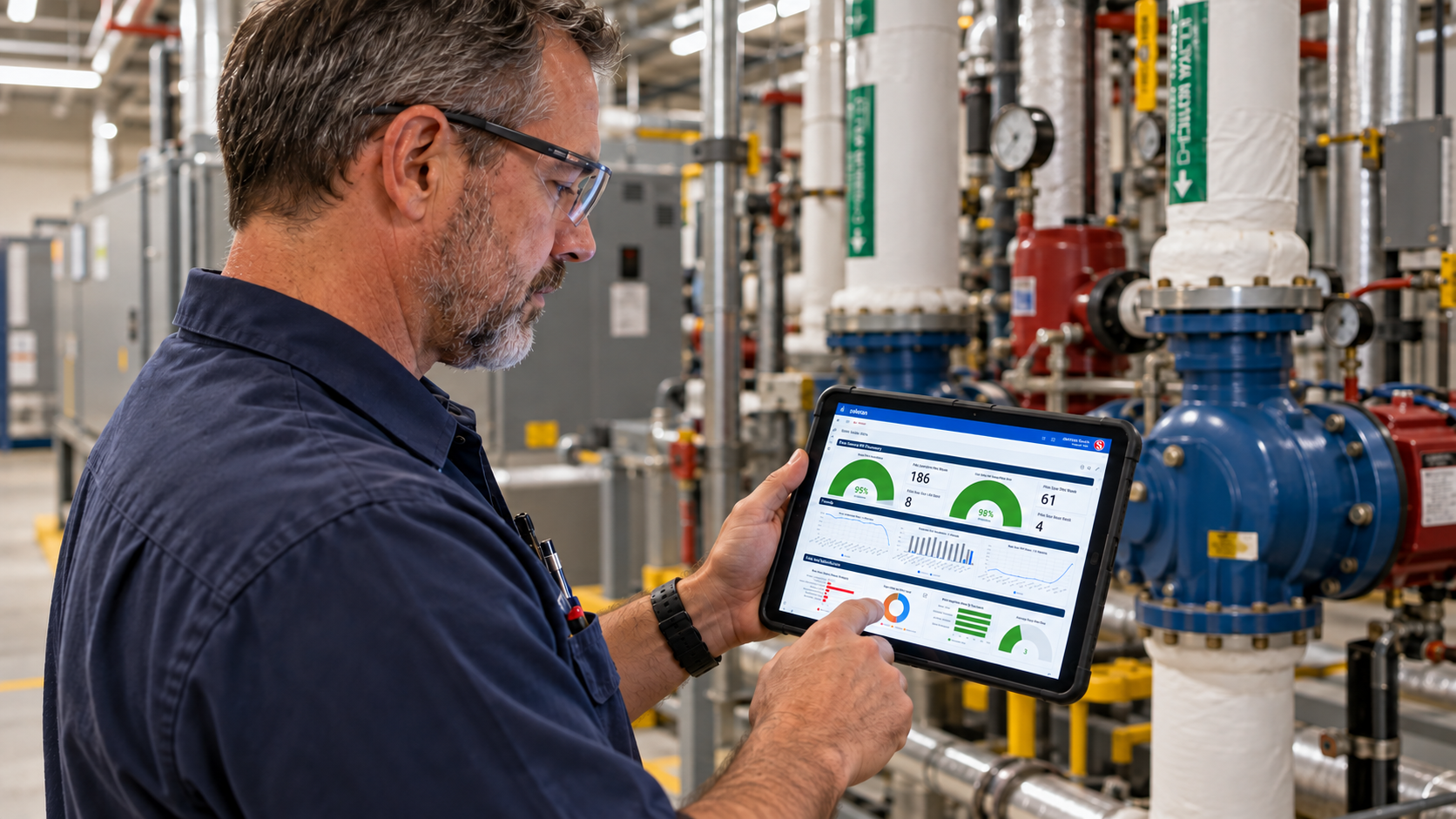
Digitization in facility management is not just about replacing paper with screens. It is about turning daily facility activity into usable, trackable, connected information.
A digital work order is not simply a digital version of a paper request. It can carry timestamps, assignments, priority levels, asset history, photos, approvals, comments, and completion records. A digital inspection is not just a checklist on a tablet. It can create follow-up tasks, document findings, route issues, and support reporting.
That is where digitization becomes powerful.
It creates a more reliable foundation for the work. It helps teams standardize processes across buildings, departments, and locations. It reduces the risk of information getting lost in someone’s inbox or buried in a folder. It gives facility leaders a clearer understanding of what is happening, what has been completed, and what still needs attention.
In large organizations, digitization also helps protect institutional knowledge. Facility teams often rely on people who “just know” how things work. They know where the valve is, which contractor to call, what happened last inspection, or how a certain process should be handled. That knowledge is valuable, but it becomes risky when it only lives in someone’s head.
Digital systems help capture the process, not just the outcome. They create continuity when staff changes, departments expand, buildings are added, or requirements shift.
Automation Helps Teams Stop Chasing the Work
Facility management is full of repetitive steps that are necessary, but not always the best use of human time.
Assign this request. Send that reminder. Escalate the overdue task. Notify the right person. Update the status. Route the approval. Create the follow-up. Close the loop.
Individually, those steps may seem small. Collectively, they can consume hours every week.
Automation gives facility teams a way to reduce the manual chasing that slows work down. It does not replace the judgment, skill, or experience of facility professionals. Instead, it supports them by making sure the right steps happen at the right time.
A good automated workflow can help create consistency. The same type of request follows the same process. The same documentation is required. The same approval path is followed. The same notifications go out. The same escalation happens if something sits too long.
That consistency matters.
In facility operations, inconsistency can lead to missed work, unclear responsibility, reporting gaps, and unnecessary risk. Automation helps create a dependable rhythm, especially in large organizations where multiple teams, vendors, departments, and locations need to stay aligned.
It also gives time back to the people doing the work. Less time spent tracking down updates means more time spent solving problems, maintaining buildings, supporting occupants, and improving operations.
Integration Creates Visibility
One of the biggest challenges in facility management is that the work rarely lives in one place.
Work orders may be in one system. Assets in another. Compliance records somewhere else. Contractor documents in email. Floor plans in a shared drive. Reports in spreadsheets. Capital planning in yet another process.
When systems do not connect, visibility suffers.
Integration helps facility teams move from scattered information to a more complete operational picture. It allows data to flow between systems, departments, and workflows so teams can make better decisions without manually stitching everything together.
This is especially important for leaders who need to understand performance across a facility, campus, or organization. How many tasks are overdue? Which assets are creating the most work? Are inspections being completed consistently? Where are bottlenecks forming? Which departments need support? What is the status of compliance-related activity?
When information is connected, those questions become easier to answer.
Integration also helps the people doing the work. A technician should not have to hunt through multiple systems to understand the context of a task. A manager should not have to wait days for a manually built report. A compliance team should not have to rebuild documentation from scattered sources.
Visibility is not just a leadership benefit. It is an everyday operational advantage.
Expansion Should Not Mean Starting Over
Facility management does not stand still. New buildings open. Departments grow. Regulations change. Service lines expand. Leadership priorities shift. Teams discover better ways to work.
Software and processes need to be able to keep up.
In the past, adding a new workflow, department, or facility often meant a heavy lift. New custom development. Additional disconnected tools. More IT involvement. More training. More complexity. More “we’ll get to that later.”
The new era of facility management requires easier expansion.
That means platforms and systems should be flexible enough to grow with the organization. Teams should be able to start with what they need today and expand as their processes mature. A work order program may grow into asset management. Permit tracking may connect to project workflows. Inspections may create corrective actions. Compliance documentation may feed reporting. One department’s process may become a standard across multiple locations.
Growth should feel like building on a foundation, not rebuilding the house every time someone needs another room.
Ease of expansion matters because facility teams are rarely working with unlimited resources. They need technology that can scale without creating unnecessary disruption. They need tools that support change instead of punishing it.
The Role of AI in the New Facility Management Landscape
Artificial intelligence is beginning to flow into many business systems, and facility management will not be immune to that shift.
For facility professionals, the AI conversation should be practical. It is not about replacing human expertise or pretending buildings can run themselves. Facility work is too physical, too complex, and too dependent on real-world context for that.
Instead, AI will likely become another layer of support across digital systems. It may help summarize information, identify patterns, surface risks, support decision-making, or reduce administrative burden. But AI is only as useful as the data and processes behind it.
That is why the foundation matters.
Organizations that still rely heavily on disconnected spreadsheets, paper forms, and inconsistent documentation may struggle to take advantage of future intelligent tools. Before AI can help interpret facility activity, that activity needs to be captured in a structured, consistent, and connected way.
In other words, the new era of facility management is not only about AI. It is about getting ready for a world where smarter systems will depend on cleaner data, better workflows, and stronger digital foundations.
Consistency Is a Competitive Advantage
Facility management is often judged by outcomes: Did the work get done? Was the building ready? Did the inspection go well? Was the issue resolved? Did the team respond quickly?
But behind every good outcome is a process.
Consistent processes help teams perform reliably, even when the workload is heavy. They make expectations clear. They reduce variation between departments. They support training. They make reporting easier. They help leaders compare performance across locations. They create defensible records when documentation matters.
Consistency does not mean rigidity. In fact, the best facility management systems allow for both standardization and flexibility. Teams need common structures, but they also need the ability to adapt those structures to their buildings, risks, workflows, and responsibilities.
That balance is where modern facility management is headed.
The goal is not to force every team into a generic process. The goal is to create a connected operating environment where teams can work in a way that makes sense, while still maintaining visibility, accountability, and consistency across the organization.
Efficiency Is More Than Speed
Efficiency is often described as doing things faster. That is part of it, but in facility management, efficiency means something deeper.
It means fewer dropped balls.
Fewer duplicate entries.
Fewer status meetings just to find out what already happened.
Fewer last-minute scrambles before audits, surveys, inspections, or leadership updates.
Fewer moments where someone says, “I know we did that, but I’m not sure where the documentation is.”
True efficiency gives teams confidence. It makes work easier to manage, easier to prove, and easier to improve. It allows facility professionals to spend less time fighting the process and more time managing the facility.
And in large organizations, that can make a significant difference. A small improvement in workflow, visibility, or consistency can ripple across departments, buildings, and teams.
Launching Forward
The future of facility management will belong to teams that can move with clarity.
Not just faster. Smarter.
Not just digitally. Connected.
Not just automated. Thoughtfully streamlined.
Not just flexible. Scalable.
As facility work becomes more complex, the systems supporting that work need to become more intuitive, integrated, and adaptable. Teams need technology that helps them manage today’s demands while preparing for tomorrow’s expectations.
That is the larger idea behind this new facility management era — and the direction behind Soleran Oro. It reflects a broader shift in the industry: away from disconnected tools and manual chasing, and toward platforms that help teams digitize work, automate routine steps, connect information, expand with less friction, and operate with greater confidence.
Facility professionals have always kept organizations moving. Now, the systems around them need to move just as well.
The new era is not coming someday.
It is already here.
Share the blog


Our latest blogs and news